

This Week’s Vinyl – A Slightly Different Perspective
There are few things I enjoy more than going out hunting for LPs. Finding something unusual, something you’ve been looking for, in a completely unexpected place and, even better, at the right price. These days, you can get hold of pretty much anything, as long as you’re prepared to pay for it. And that’s where the problem lies. Different pressings, coloured vinyl, heavier sleeves, unusual labels – anything that can push up the price of a record, whether in terms of collectability or actual market value, is constantly being highlighted. It can be quite difficult to navigate this jungle of available records. My own philosophy is that if I come across a good pressing and it costs less than a new reissue, then I consider it a fair price, provided the record itself is in good condition.
Anyway, this week’s vinyl comes from a slightly different angle. What is it, really, that makes one record worth more or less than another? There are plenty of variables that dealers take into account when assessing a record. Nothing we need to get into here, but some things are more or less a big no-no. Large, ugly stickers, for instance, or writing on the sleeves. Signed sleeves, on the other hand, are a different matter. There are plenty of examples, some signed by previous owners, others by someone who was actually part of the band featured on the LP. Obviously, the appeal varies depending on who did the signing, but it is certainly accepted and, of course, something many collectors actively look for.
I have, for example, a stereo copy of LOVE’s Forever Changes, where someone called Richard Barlow has taped a photograph of Arthur Lee onto the sleeve, dated August 1968, and then written his full address along one edge of the cover. I can only assume he loved this record as much as I do and didn't want it growing legs and disappearing.
I’ve also come across old photographs, small pieces of aluminium foil and letters tucked inside record sleeves. It’s incredibly stimulating to let your imagination run wild and, a bit like a detective, try to piece the story together. When, where and why? How did the LP end up going astray, and eventually find its way into my hands?
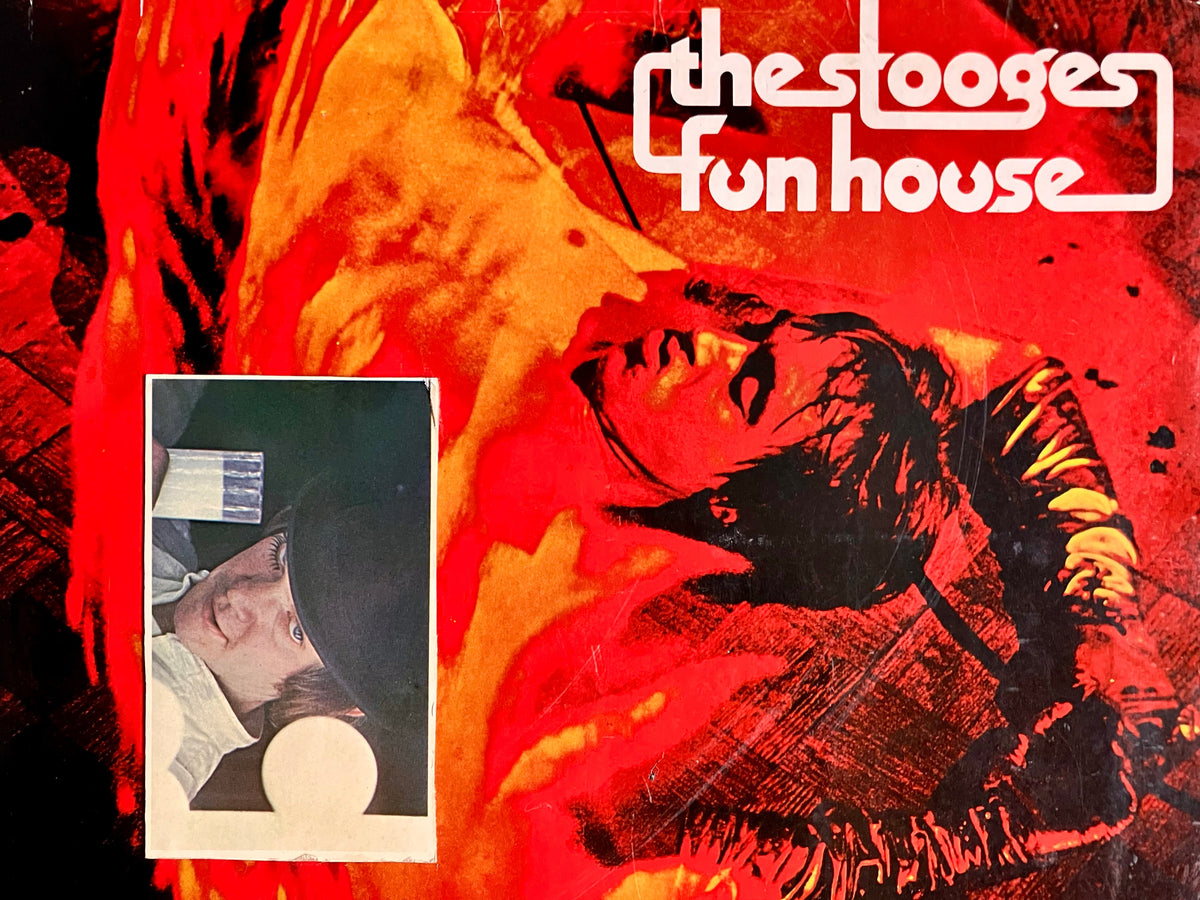
One of my favourite examples in this category is The Stooges’ Fun House, a French edition distributed by Vogue for Elektra Records. Someone has written a little greeting in French on the inside of the gatefold sleeve. I honestly have no idea what it says, but there is a signature: Roland.
But what really makes this particular sleeve unusual are four small cardboard photographs that someone has glued inside. The images are taken from the film A Clockwork Orange. Fun House was released in 1970, and Kubrick’s film premiered in 1971. Both the band and the film could be said to capture a relatively brutal, violent and disillusioned youth culture, set against the backdrop of the transition from the sixties into the seventies.
In the world of record collecting, a clean and untouched copy is often the most desirable. But sometimes it is precisely the traces left behind by previous owners that make an object interesting. This time, I paid less for an early French pressing of The Stooges’ Fun House, simply because someone had written on the sleeve and glued in four photographs from A Clockwork Orange. To me, it wasn't a damaged record sleeve. It was an unfinished story.


