


Are you looking for a statement piece that stands apart from the crowd —something akin to a work of art, designed to enhance your quality of life? Then you have come to the right place. Each product is individually handcrafted according to proven artisanal traditions. No two pieces are ever identical, giving every turntable and loudspeaker its own unique visual character. This is more than an investment in a hi-fi system —it is an investment in craftsmanship, in contemporary expression, and in a vision that resonates with both the present and the future.
Oops Audio — Expect the Unexpected
At Oops Audio, we chase emotion — because the magic in music isn’t always clean. It lives in the texture, in the subtle imperfections, in those “oops” moments that make something feel real. We are part of a trend that advocates a more contemporary view of music technology — where great sound is more than numbers. We do not contradict traditional HiFi, which often focuses on measurements and technical perfection; instead, we take a more balanced path — one that values both precision and how music is actually experienced. Each Oops Audio product is engineered for accuracy, though with a more pronounced emphasis — crafted to preserve the nuance, warmth, and natural dynamics of a sonic performance. Through careful engineering, thoughtfully selected components, and a listening-led approach to tuning, we aim to create a sound that feels engaging, expressive, and true to musical preferences.
Oops Audio is starting a different conversation: what if the best sound isn’t the most clear — but the most felt? A complementary perspective — sound that connects, surprises, and resonates on a deeper level, where you rediscover why you fell in love with music in the first place.
Our Products
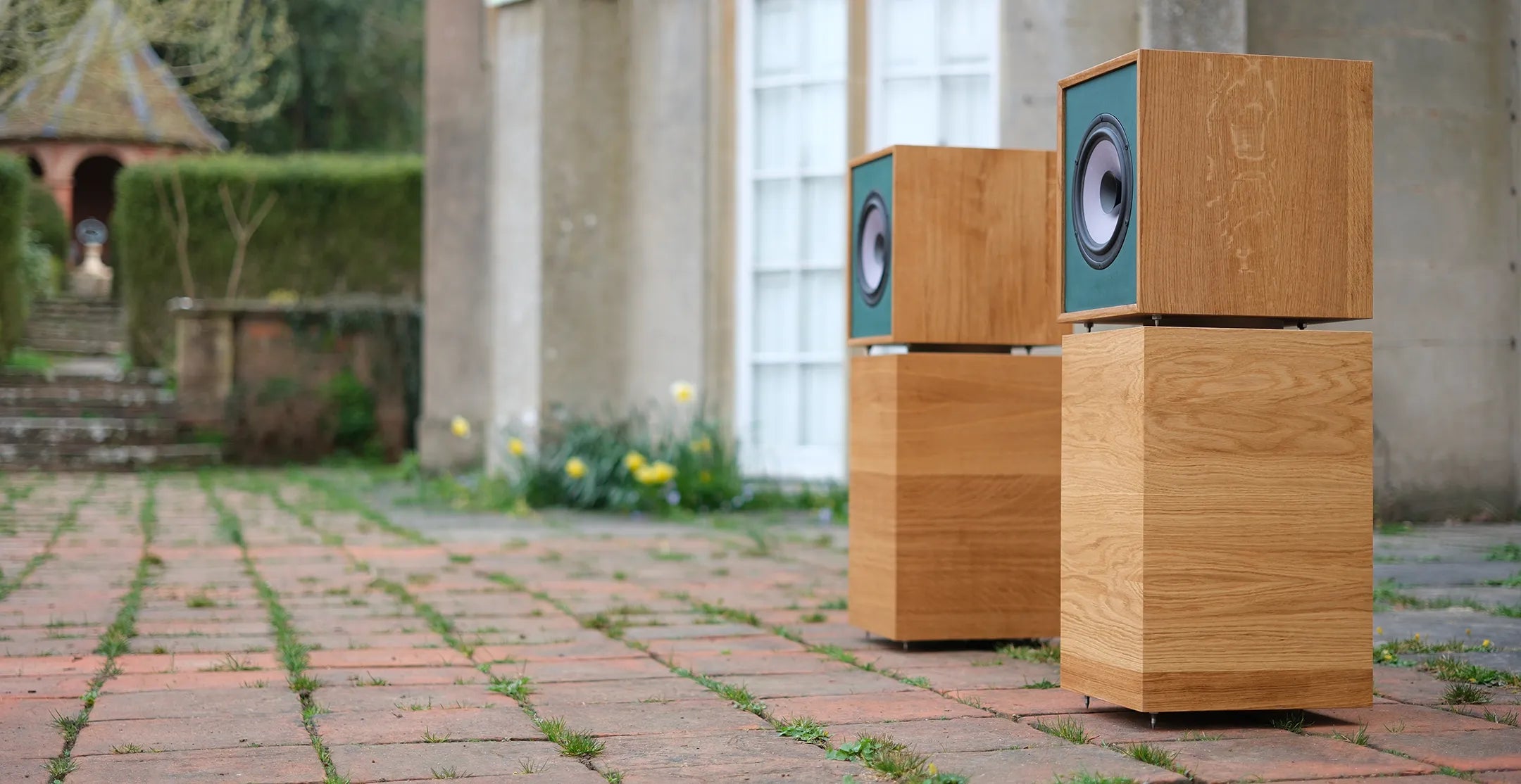
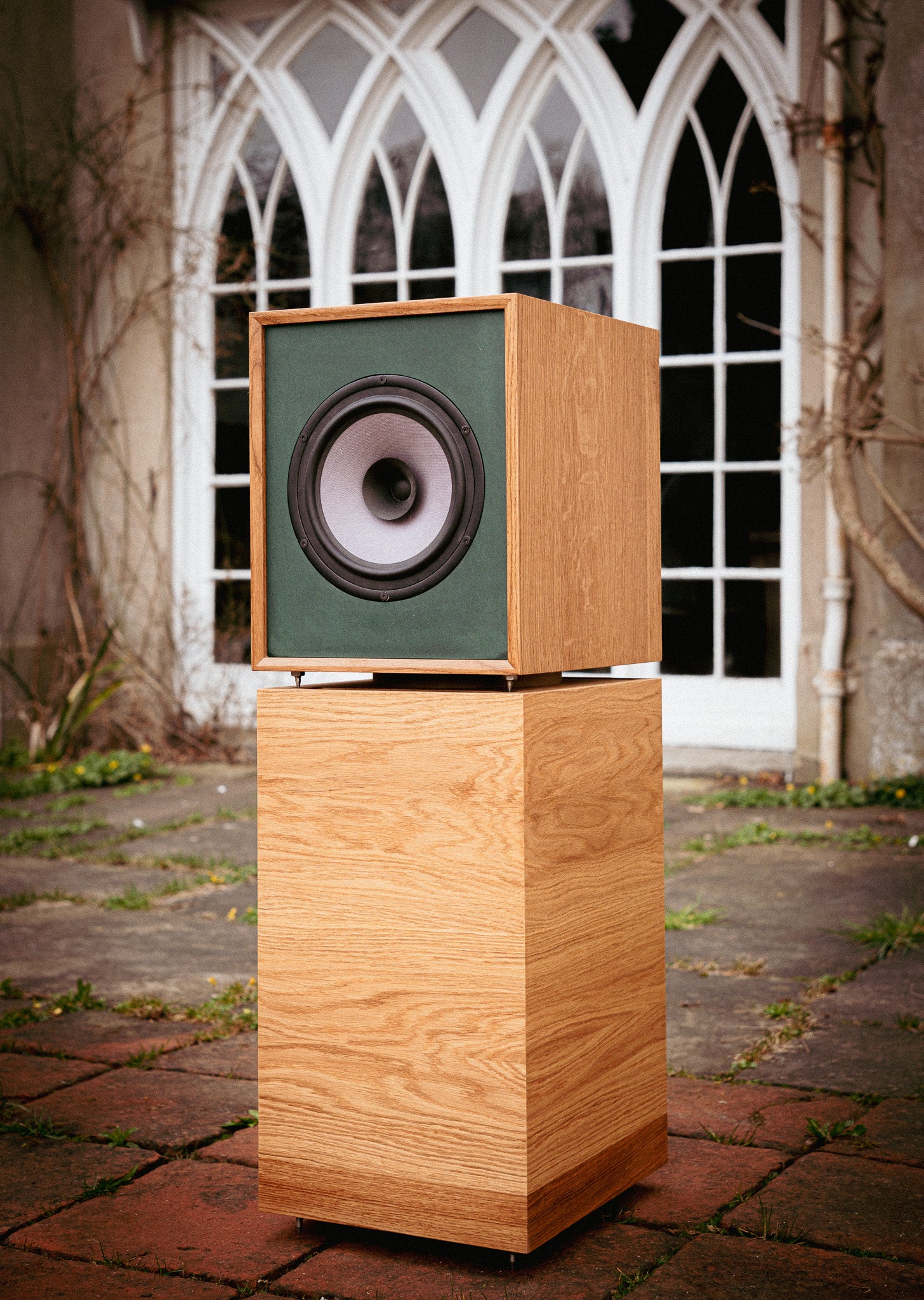
The turntable’s internal components—and their carefully engineered relationships—are inherently resistant to vibration. Punch and Wallop are fast, rhythmically engaging, and dynamically expressive, delivering a wide, immersive soundstage. They’re built to surprise you, draw you in, and surround you with a fuller, longer-lasting musical experience. To complete this musical evolution, we created Oomph—a loudspeaker that serves as the icing on the cake.


VINYL OF THE WEEK

JEFFERSON AIRPLANE – CROWN OF CREATION
Once upon a time, Gothenburg was full of demolition leases and cheap flats in buildings without modern conveniences. I was lucky enough to live in several such flats, just like my casual acquaintance Peter. I first met Peter at Café Norrland. An institution, with wonderful walnut rolls filled with Brie and salami. The coffee was always served in a pot, about three cups at a time. The tiled floor was laid in diamond patterns, rather like an English public lavatory. Everything exuded a state of emergency and a certain need for sanitation. I loved the place. I went there as often as I could as a poor student. Peter was poor too, a jack-of-all-trades with business tucked into his inside pocket for every occasion, from Jazzspecial to bulk lots of blue jeans. More often than not, I would treat him to coffee from my pot or help him out with the soup of the day. It was LPs that brought us together. Music in general, old bands and new. Peter lived near Redbergsplatsen, in a building that had been condemned because of dry rot and fungal growth. And that brings me, quite naturally, to the psychedelic music that played on his stereo. Music that would, in time, become increasingly sought after, but which had yet to enjoy the renaissance that would later send the prices of rare vinyl soaring. There was often a crate of LPs sitting there, waiting to change hands. Peter needed to scrape together the rent. Prices ranged from five to twenty-five kronor. Crown of Creation was one such five-kronor LP. Appropriately enough, the album revolves around social criticism and a sense that the world is changing. But Peter had a different view. For him, there was only one track worth bothering with: Lather, the opening track on side one. The rest simply wasn't interesting enough to keep. For me, it's quite the opposite. Or perhaps not. Lather is so good that it carries the entire album on its own. A little one-off that has etched itself into my memory, a song that always brings back the best of thoughts and makes me feel free. I've also said many times that Lather itself, a character in the song who goes his own way, reminds me of – and is therefore, in its own way, dedicated to – my oldest friend, Stefan, otherwise known as Stefan the Man. Perhaps that is precisely what music can do. A song becomes more than music. It becomes a person, a time, a friendship and a feeling that never quite disappears. For me, Jefferson Airplane's Crown of Creation is one of the finest examples of the band's psychedelic expression. But above all, it is Lather that makes this particular five-kronor record mean so much to me. From Peter's crate of records to my own collection. Some finds turn out to be worth considerably more than the price tag could ever have suggested.
Read More
Captain Beefheart – Safe as Milk (Dropout Boogie)
My mate Simon Nilsbet introduced me to Captain Beefheart: Yellow Brick Road and Autumn’s Child. I was utterly flabbergasted. Zig Zag Wanderer came pouring out of the loudspeakers. Simon had a hifi system of some distinction: Quad ESL-63 electrostatics, the big ones, complete with Quad bass units. The protective grilles had, naturally, been removed. One simply did these things. Art demanded sacrifice, after all. They stood free in the room like a pair of enormous flytraps, only considerably less forgiving. Quad expressly warns against the extremely high voltages present inside these speakers and forbids users from removing the protective grilles or base panels. I seem to recall that the system had a dedicated crossover, and that the bass units required a separate power amplifier. In other words, we had a pair of completely undressed high-voltage contraptions, capable, according to the Quad service manual, of voltage peaks of up to 5,300 volts, retaining a charge that could dissipate only slowly even after the power had been switched off. Quite the conversation piece, provided one survived long enough to discuss it. Simon adored this artist. A voice that could growl, bark, crack and bellow. Blues phrases twisted and contorted until they almost lost their shape, becoming positively hysterical. Irregular rhythms, dissonance and the strangest instrumental interplay, all accompanied by a vocal style that could sound less like conventional singing than some sort of animalistic outburst. Amidst this tangle of Nottingham Analogue turntable, stacked Naim NAP 250 power amplifiers and cables strewn across the floor like so many tripwires, we smoked jazz tobacco and drank duty-free whisky. I can hear the question forming on your lips: Can this chap really be trusted to exercise sound judgement? Well, this was a long time ago, and my frontal lobes have matured somewhat since then. But, more importantly, I have spun this LP a hundred times or more, to such an extent that I am now on my third copy.
Read More
Fields-Fields
Some of you have asked me for personal experience related to records. Yes, I agree; giving you stories you can find on the web is just a bit boring. Today I will give you a treasure and neglected masterpiece: Fields – Fields Fields was a British trio formed by musicians with strong connections to Rare Bird, one of my favorites, and King Crimson. Keyboard player Graham Field came from Rare Bird, while drummer Andy McCulloch had played on King Crimson’s Lizard. Alan Barry completed the trio on vocals, bass, guitar and mellotron. Sadly, Fields never received the attention they deserved and the band was short-lived. But this is exactly the kind of record that makes digging through vinyl so rewarding. I absolutely love this album, especially this first UK pressing. Fantastic early-70s British progressive rock, full of Hammond, mellotron and atmosphere. A true neglected masterpiece, still very affordable. I can honestly tell you that I picked this one just for the cover, then realised the connection to Rare Bird.
Read More
Sounds Like Us
Great sound deserves great music. Good music. Great sound. A collection of tracks we love, curated for those who love music. Like we do.

News & Events
That is why we actively present our products at selected exhibitions and audio shows across Europe, where visitors can encounter our systems in carefully prepared listening environments. In addition to exhibitions, our products are also displayed through a curated network of selected retail partners. These locations are chosen not only for their knowledge, but for their ability to present sound properly — in spaces where music is listened to with attention and respect. Whether at an international show or in a local store, every encounter is designed to offer a true understanding of how our products sound — and feel.


THE TRUTH ABOUT SOUND
-Why does my Hi-Fi system lack feeling?
Hi-fi systems are ecosystems, not just collections of components. Different designers voice their gear in different ways: some aim for neutrality, others for warmth or maximum detail. When components are mixed, the result can be a system that works against itself. The real issue isn’t variety—it’s the lack of synergy.
Avoid the mistakes of...
Nothing gets better than the source. “Garbage in, garbage out” is broadly true—but incomplete. A mediocre recording on a well-tuned system will often sound more engaging than the same recording on a poorly matched high-end setup. The source sets the ceiling, but the system determines how close you get—and how pleasant the flaws sounds.
Hi-Fi Gains without spending money
Most systems don’t fail from lack of upgrades—they fail from ignored fundamentals. Fix the basics before you buy anything.
The Connoisseur
Overall, a longing for analog is increasingly linked to both taste and status in our highly technical age. What was once considered essential for progress is now often questioned. Among more conscious audiences, elements once dismissed as “retrogressive” are now valued for their balance of reason and emotion.

Read more about our philosophy about sound
The Story behind Oops Audio

Oops Audio is unique. It is both a statement and a testament to the value of resources, with the craft process at its heart. The type of wood used in each plinth varies according to availability, and production begins only when the material is ready and has reached us.
Every Wallop and Punch turntable is individually named, highlighting its one-of-a-kind nature and honoring the tree from which it came—its origin is geotagged. Because of this meticulous and deliberate process, production is never rushed. Owning a Wallop or a Punch may require patience, but that patience is part of the privilege of possessing something truly exceptional.
The same philosophy extends to our Oomph speakers in oak.

The oopsizzle crew
The Oopsizzle Crew is made up of the people who use, listen to, and live with Oops Audio products every day. It’s a growing community of listeners, creators, and enthusiasts connected by a shared appreciation for music and rhythm.
What brings us together is simple — a love for music and a respect for the rhythm that runs through everything we build. From the workshop to the listening room, the connection between maker and listener becomes part of the same experience.
If music matters to you, you're already part of the Crew.


Share the music. Share the message.
Good taste isn’t just about what you listen to. Wear yours with the Oops Audio tee.
Available in petrol, green and apricot yellow.
Hurry up, only 2 items left in stock.