


Our Philosophy
Why does my HiFi system lack feeling?
1. “Mixture of producers with varying philosophies”
This is real. Hi-fi systems are ecosystems, not just collections of parts. Different designers voice gear differently—some aim for neutrality, others for warmth, others for “detail.” Mixing components without understanding those philosophies can lead to a system that fights itself (e.g., overly bright amp + analytical speakers = fatigue). The hidden issue isn’t variety—it’s lack of system synergy.
2. “Nothing gets better than the source”
This echoes the classic “garbage in, garbage out,” which is broadly true—but incomplete. Modern DACs, amplifiers, and speakers do shape the sound significantly. A mediocre recording on a coherent, well-tuned system will almost always sound more engaging than the same recording on a poorly matched, high-end setup.
The source sets the ceiling, but the system determines how close you get—and how pleasant the flaws are.
3. "Complexity must justify itself"
Complex designs are not inherently better—only more demanding. Every added part, circuit, or feature introduces new variables, new failure points, and new compromises.
Some complexity is necessary: to solve real engineering constraints, to extend performance beyond simple limits. But much of it exists to: compensate for weaker fundamentals impress on paper
or differentiate in a crowded market. If complexity doesn’t produce a clear, audible benefit in your system, it’s a liability—not an advantage. Simple systems often sound better not because simplicity is superior, but because they avoid unnecessary problems.
4. “Expensive ≠ better”
Absolutely correct—but with nuance. Higher cost often buys: better build quality, tighter tolerances, lower distortion. But beyond a certain point, returns diminish fast. Marketing, branding, and luxury positioning take over. The mistake isn’t buying expensive gear—it’s assuming price guarantees performance.
5. “Trust your judgment”
A good piece of advice, if something "smells strange" it is often a dog buried somewhere, but dangerous if taken alone. Your ears are not a neutral measurement tool. What you hear is affected by: Expectation — If you think something should sound better (more expensive, new, recommended), your brain often makes it sound better. Volume — Slightly louder almost always sounds “better” (more detail, more bass, more clarity).
Short-term memory — You forget sound quickly, so comparisons become fuzzy. So “trust your ears” only works if you remove those biases first.
6. “Spending too much money on equipment” / media is the star.
Don’t build a €10,000 system and starve it of music. If you start choosing records to flatter your setup, you’ve reversed the purpose. Don’t listen for sound—listen for music. Sound is a tool. Music is the point. Music isn’t hi-fi effects. It’s melody, rhythm, timing, tone, and how they interact to create meaning. A system that only shines on “audiophile” recordings is a limited system.
A good system makes all music engaging—even imperfect recordings. If you’re buying music to suit your system, your priorities are backwards. Build a system that serves the music—not the other way around.

Hi-Fi Gains Without Spending Money
1. “Placement defines performance”
Be honest about your room. Symmetry, distance, and stability matter more than upgrades. A poorly placed system cannot be fixed downstream.
2. “Stability over sophistication“
Rigid, level, and vibration-controlled always wins. If it moves, resonates, or wobbles, it degrades the signal.
3. “Clean records properly“
Dry wiping with a cloth can help with surface dust, but vigorous brushing can grind particles deeper. Best practice: wet cleaning when necessary, otherwise handle minimally.
4. “Never blow dust of the cartridge“
Your breath carries moisture and particles. Use a proper stylus brush gently and in the correct direction. Dust easily gets stuck in the pickup's moving parts.
5. “Replace the stylus earlier than you think“ A worn stylus damages music. A fresh modest MM-cartridge will outperform an expensive, worn one. Focus on extracting maximum musicality, regardless of price category, better a fresh MM-needle, then a worn expensive MC-cartridge.
6. “Maintain the drive system“
Belts age, stretch, and slip.
Replace periodically; cleaning can help, but aging rubber is inevitable.
7. “Contacts improve with use—but also with care“ Plugging/unplugging can reduce oxidation.
8. “Consistency trumps perfection in cable selection“ Avoid unnecessary differences and chaos. Identical cable lengths are crucial in most installations – the more options, the more variables and risk of error.
9. “Respect signal order and integrity“
Keep the chain logical and short:
Source → Phono stage → Preamp → Power amp → Speakers
Every extra stage is a potential degradation.
10. “Mechanical precision matters“
Even pressure, proper torque, and correct alignment (tonearm, cartridge, spikes) directly affect performance.
Small physical errors create audible problems.

Our Philosophy
Hi-Fi Reality: A Manifesto
1. “A system is a whole, not a collection“
Mismatched philosophies don’t average out—they conflict. Synergy beats specs.
2. “The source sets the limit“
No component can restore what isn’t there.
3. “Simplicity is a virtue—until proven otherwise“
Complexity is often a workaround. If it’s complicated, ask what problem it’s hiding.
4. “Price is not performance“ Beyond a certain point, you’re paying for diminishing returns, branding, or aesthetics—not music.
5. “Your ears matter—but they are not objective“
Trust listening, but control bias. Louder, newer, and pricier often seem better.
6. “The LP is the star“ Music on modest Hi-Fi systems always beats poorly assembled elite systems – every time.
7. “The room is part of the system“
Ignore acoustics, and everything else is compromised.
8. “Upgrades don’t fix bad foundations“
If something sounds wrong, identify the cause. Don’t throw money at symptoms.
9. “Resolution reveals – it does not improve the music“
10. “Stop chasing—start finishing“
A system is “done” when it consistently moves you, not when there’s nothing left to buy.
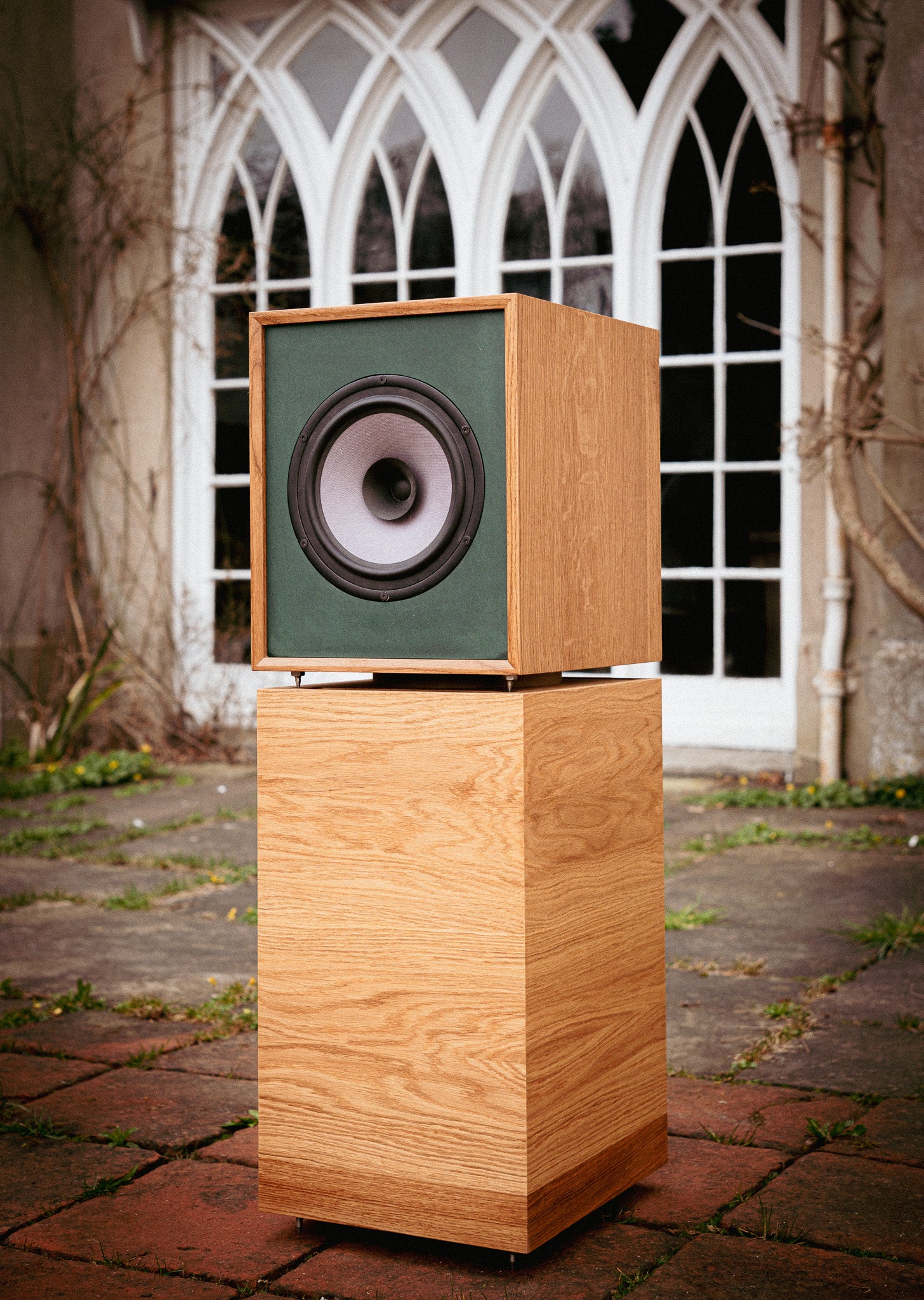
Oops Audio — Expect the Unexpected
Oops Audio — Expect the Unexpected “Most audio companies chase perfection. At Oops Audio, we chase emotion. Because the truth is, the magic in music isn’t always clean—it lives in the texture, the imperfection—the ‘oops’ moments that make something real. ” Oops Audio uncover its latest lineup as a bold rebellion against sterile sound. Each product is engineered not only for precision, but for character—crafted to preserve the nuance, warmth, and unpredictability of a live performance. Through proprietary tuning methods, carefully selected components, and a philosophy rooted in human listening rather than pure measurement, Oops Audio offers a distinctly different sonic experience.“In an industry obsessed with numbers, we’re starting a different conversation: what if the best sound isn’t the most perfect—but the most felt? ”More than a product launch, Oops Audio is challenging expectations. In a world of predictable sound, it delivers something rare—audio that surprises, engages, and resonates on a deeper level. Step into the Oops Audio experience. Bring your own tracks. Rediscover why you fell in love with music in the first place. Oops Audio — because the best moments in music were never planned.
