

The Oops Turntable Architecture
Every element in an Oops Audio turntable is chosen with intent — not only for strength or durability, but for how it shapes the behavior of sound.
From the layered wood structure to the precision-machined bearing foundation, materials are selected and combined to form a mechanically stable and acoustically controlled platform. The goal is not simply to build a rigid structure, but to create a system where vibration is guided, absorbed, and dissipated in predictable ways. True performance comes from balance — between mass and damping, rigidity and control, material and craftsmanship. Each component contributes to the stability of rotation, the suppression of unwanted resonance, and the preservation of musical detail. What follows is not a collection of parts, but a carefully tuned mechanical foundation — engineered to support consistent performance over time and to allow the music to emerge with clarity, stability, and presence.
Two turntables. One construction philosophy.
Both Wallop and Punch are built from the same fundamental idea: a turntable should not behave like a machine first, but like a musical instrument for music reproduction. Every construction principle, material choice and mechanical solution exists to protect the emotional and dynamic integrity of music. Wallop expresses this idea through intelligent low-mass engineering. Punch takes the same philosophy further — with greater mass, isolation, rigidity and mechanical refinement.
| Principle | Wallop | Punch |
|---|---|---|
| Philosophy | Lightweight, instrument-inspired construction; designed for exceptional musicality through intelligent low-mass engineering | Reference-level refinement of the same philosophy; every element optimized for technical precision, dynamic integrity, and exclusive expression |
| Platter concept | Ultra-light architecture with minimal bearing load; reduces stress on the bearing and allows the armboard and bearing structure to remain extremely light, rigid, and mechanically efficient | Refined ultra-light system with enhanced stability, improved torsional control, and lower vibration; further optimized to reduce micro-resonances and energy storage for reference-grade composure |
| Armboard | Truss-based plywood structure with natural hide-glue bonding; thin wooden slats arranged in a truss-like torsion structure, providing remarkable stiffness-to-mass ratio and natural damping | Advanced cedar honeycomb torsion-box architecture; thicker and substantially stiffer than Wallop, with internal slat height 15% greater; creates an even calmer mechanical environment for the cartridge and tonearm while minimizing structural flex |
| Plinth | Optimized layered solid wood construction with controlled damping; multiple 3 x 6 mm structural base layers in the bottom plate | Enlarged laminated solid-wood chassis (25% higher, 15% thicker then Wallop); The bottom plate is twice as thick as the corresponding plate in Wallop, three independent 12 mm compressed wood layers bonded with damping adhesive; thicker and structurally segregated layers for motor, skids (Oopskids), and side-stiffening; dramatically reduces vibration transfer between subsystems |
| Size | 45 x 35 x 19 cm – 7.5 kg | 50 x 38 x 22 cm – 11 kg |
| Motor isolation | Dual-point mounted, damped configuration; excellent damping and stability | Single-point suspended system within one of the three lower plinth layers; rests on a robust rubber bushing; precise top-side belt tension adjustment; superior decoupling and mechanical isolation from tonearm and sub-platter |
| Power supply | Optional external upgrade path | Rega NEO PSU MKII included as standard; electronically controlled 24V bi-phase AC motor system for superior speed accuracy, stability, and fine adjustment |
| Character | Expressive, open, dynamically fluid; intelligent lightweight engineering and musical engagement | Ultra-controlled, quieter, reference-grade precision and composure; stiffer, more isolated, more adjustable, and mechanically more resolved in every aspect |
Summary:
Wallop was created around the ambition of achieving exceptional musicality through intelligent low-mass engineering. Instead of relying on excessive platter weight or oversized bearing assemblies, it employs an ultra-light platter concept and a truss-based plywood armboard inspired by classical instrument-making principles. This results in a highly resonant-controlled structure with remarkable stiffness-to-mass ratio and natural damping characteristics.
Punch takes this philosophy significantly further. Its cedar honeycomb torsion-box armboard and bearing platform are thicker, stiffer, and optimized to reduce micro-resonances and structural flex under dynamic playback conditions. The plinth is physically larger, structurally deeper, and segregates critical functions across laminated layers for motor, skids, and feet, dramatically reducing vibration transfer. Motor isolation and belt adjustment are more sophisticated, and the Rega NEO PSU MKII provides superior speed accuracy and stability as standard.
Ultimately, the difference between Wallop and Punch is a matter of refinement pushed to its absolute limit. Wallop is extraordinarily musical and emotionally engaging, while Punch advances that philosophy into uncompromising reference territory — quieter, stiffer, more isolated, more adjustable, and mechanically more resolved in every aspect. Both turntables exist to serve the music; Punch simply goes further.
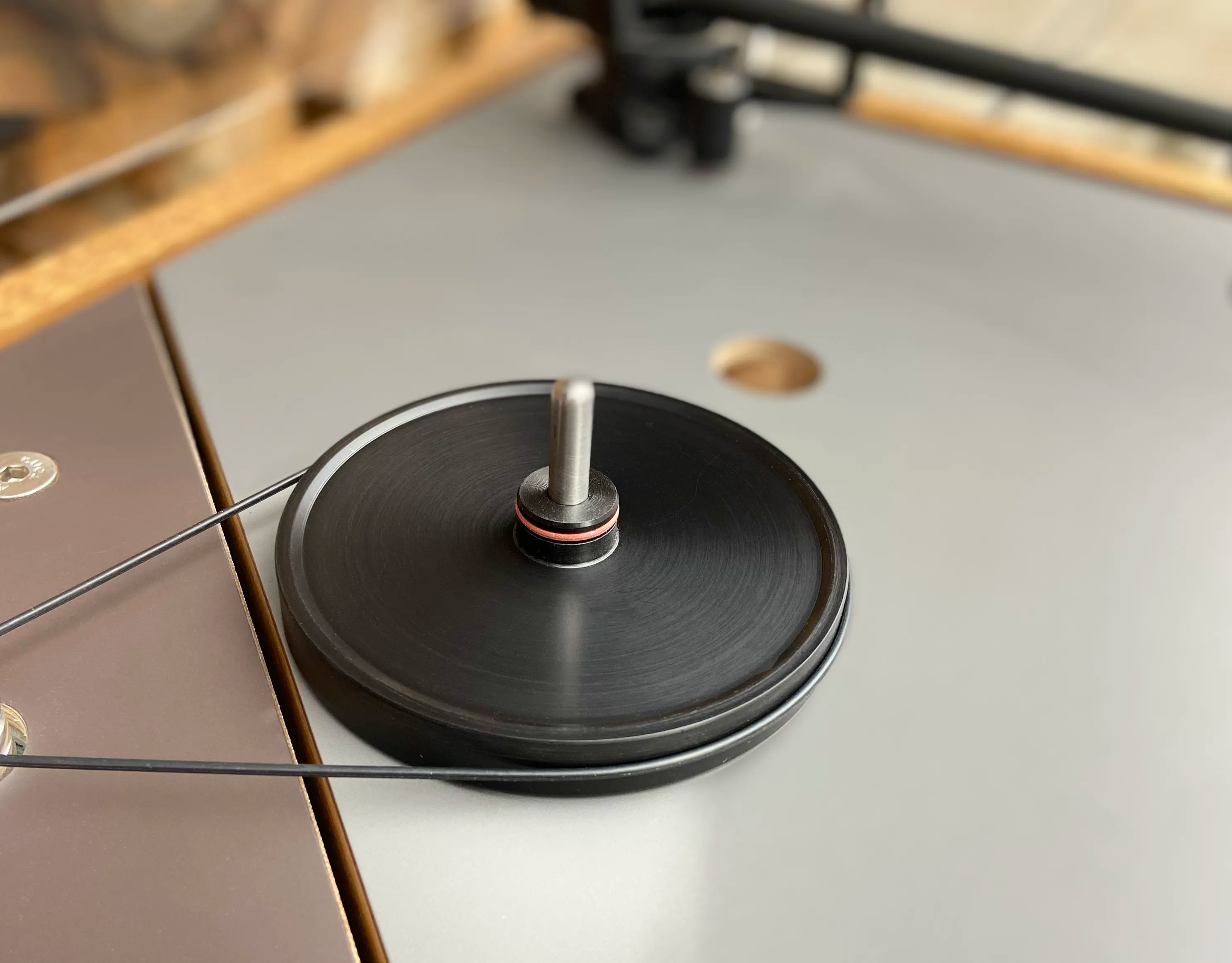
SUB-PLATTER
The sub platter is crafted from polyoxymethylene (POM/Delrin®). The material’s dense, homogenous structure offers exceptional resonance control. POM stands for polyoxymethylene (also known as acetal plastic), an engineering thermoplastic widely used in precision components. In simple terms, it can be described as a plastic that behaves more like metal than conventional plastics. The polished central shaft is made of bearing-grade stainless steel. At its tip sits a PEEK thrust pad, designed to create a smooth, low-friction contact point. This non-metal interface helps minimize friction and reduces background noise and unwanted resonance.

THE PLATTER
Precision-lathed multi-layer wood composite, bonded with a vibration-damping adhesive for enhanced resonance control.

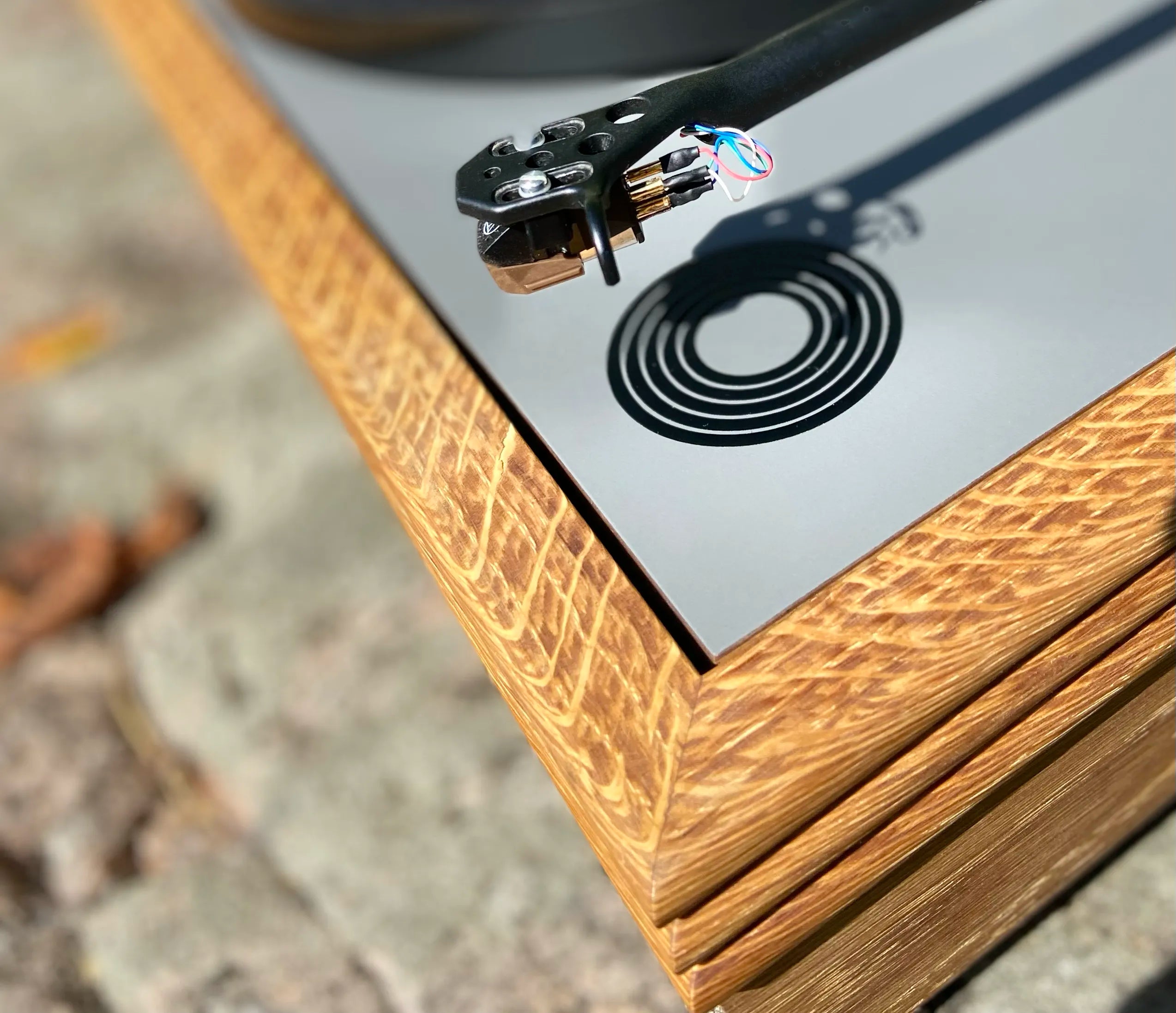
THE PLINTH
Primarily solid oak and ash, with occasional elm and walnut—selected for optimal density and fiber structure to control resonance. Performance is governed by the balance of mass, material properties, and precision joinery. When properly engineered, solid wood provides a naturally well-damped structure that effectively dissipates unwanted vibrations, resulting in a more controlled and stable performance. The key is careful tuning of the construction, not just the choice of material.

CENTRAL BEARING
The grade stainless steel main central bearing, stainless steel due to its durability, stability, and excellent wear characteristics. It provides a solid and well-controlled foundation for the main bearing, contributing to long-term precision and reliable performance, and is widely regarded as a hallmark of robust engineering.

THE LID
Standard Acrylic transperant. Protects against dust. While some audiophiles prefer to play with the lid removed to minimize potential resonance, Wallop and Punch thoughtfully designed hinges and lid construction with open conners, help reduce vibrations and are unlikely to have a noticeable impact on dynamics during normal listening.
Tonearm & Cartridge Options — Built for Choice
Every Oops Audio turntable is designed to be adaptable rather than fixed to a single configuration. Each unit can be supplied with a carefully selected tonearm and cartridge, allowing the system to be matched to both listening preferences and system requirements.
We collaborate with respected manufacturers such as Rega and Audio-Technica, known for their precision engineering and reliable performance. These combinations provide stable tracking, controlled resonance behavior, and consistent playback — forming a balanced starting point for both experienced listeners and those entering the world of vinyl.
Flexibility is built into the construction itself. Each turntable can be equipped with an armboard prepared for different tonearm geometries and mounting standards. If a customer prefers a specific tonearm model, the armboard can be custom-machined to match the required mounting distance and alignment parameters, ensuring proper mechanical integration and accurate setup.
Some listeners prefer a complete, ready-to-play configuration, while others choose to refine and upgrade their system over time. Oops turntables support both approaches — allowing the system to evolve as preferences develop, without limiting future possibilities.
Because true performance is not defined by a single component, but by how well each part works together.

Oops Audio — Expect the Unexpected
At Oops Audio, we chase emotion. Because the truth is, the magic in music isn’t always clean—it lives in the texture, the imperfection—the ‘oops’ moments that make something real. Oops Audio—a fearless rebellion against sterile sound in a world obsessed with perfection. Each product is engineered not only for precision, but for character—crafted to preserve the nuance, warmth, and unpredictability of a live performance. Through proprietary tuning methods, carefully selected components, and a philosophy rooted in human listening rather than pure measurement, Oops Audio offers a distinctly different sonic experience. In an industry obsessed with numbers, we’re starting a different conversation: - what if the best sound isn’t the most perfect—but the most felt? Oops Audio is challenging expectations. In a world of predictable sound, it delivers something rare—audio that surprises, engages, and resonates on a deeper level. Step into the Oops Audio experience. Rediscover why you fell in love with music in the first place.
Oops Audio — because the best moments in music were never planned.

Frequently Asked Questions about key elements
What is Delrin?
What is Delrin?
Polyoxymethylene (POM/Delrin®) in simple terms, it can be described as a plastic that behaves more like metal than conventional plastics.
What makes POM special?
High stiffness: The material deforms very little under load, making it well-suited for components that must maintain exact geometry, such as a sub-platter.
Low friction: POM has a naturally slippery surface, which contributes to smooth and stable rotation against bearings and shafts.
Good dimensional stability: It is minimally affected by changes in temperature and humidity, helping it maintain tight tolerances over time.
Internal damping: Unlike many metals, POM tends to absorb rather than “ring” when vibrated, which can help reduce unwanted resonances.
Where are Oops Audio products manufactured?
Where are Oops Audio products manufactured?
All Oops Audio products are handcrafted in Sweden at the Onslunda Carpentry Shop. Each wooden component is carefully produced using traditional woodworking skills. By keeping production local, we maintain full control over materials, craftsmanship, and sound quality — ensuring every product reflects the character and precision we stand for.
Is the wood in your products traceable and responsibly sourced?
Is the wood in your products traceable and responsibly sourced?
Yes. Every piece of wood used in Oops Audio products is individually selected and some geotagged, allowing us to trace its origin with precision.
We work exclusively with responsibly sourced timber from naturally fallen or carefully managed forests. We do not harvest trees solely for the purpose of producing our turntables or audio components. Instead, we focus on using wood that already exists within responsible forestry cycles.
Each wooden element is chosen not only for its visual character, but also for its acoustic properties and long-term stability. This careful selection process ensures that every product carries a unique natural identity while respecting the forests it comes from.
Do you offer technical support?
Do you offer technical support?
Yes. We provide dedicated technical support for all Oops Audio products.
If you have questions about setup, operation, or maintenance, our team is available to guide you and ensure your system performs as intended. We believe great sound should be effortless to enjoy.
You can contact us directly through our support channel, and we will respond as quickly as possible with clear guidance tailored to your product.
What is the torsion box?
What is the torsion box?
A torsion box is a lightweight yet extremely rigid construction designed to achieve high structural stability without excessive weight. The construction typically consists of two outer layers connected by an internal core structure — often a grid or honeycomb pattern — allowing loads to be distributed evenly across the entire surface. What makes a torsion box effective is its ability to resist: bending,
twisting (torsion), and deformation over time.