

LOVE was an American psychedelic rock band formed in Los Angeles by the eccentric and artistic Arthur Lee. Forever Changes is their third studio album, released in November 1967 by Elektra Records, and the final album recorded by the original lineup. Although it achieved only moderate commercial success upon release, it has since influenced countless artists and developed a devoted following. It is widely regarded as one of the greatest psychedelic rock albums of the 1960s and is considered essential listening for anyone interested in the genre.
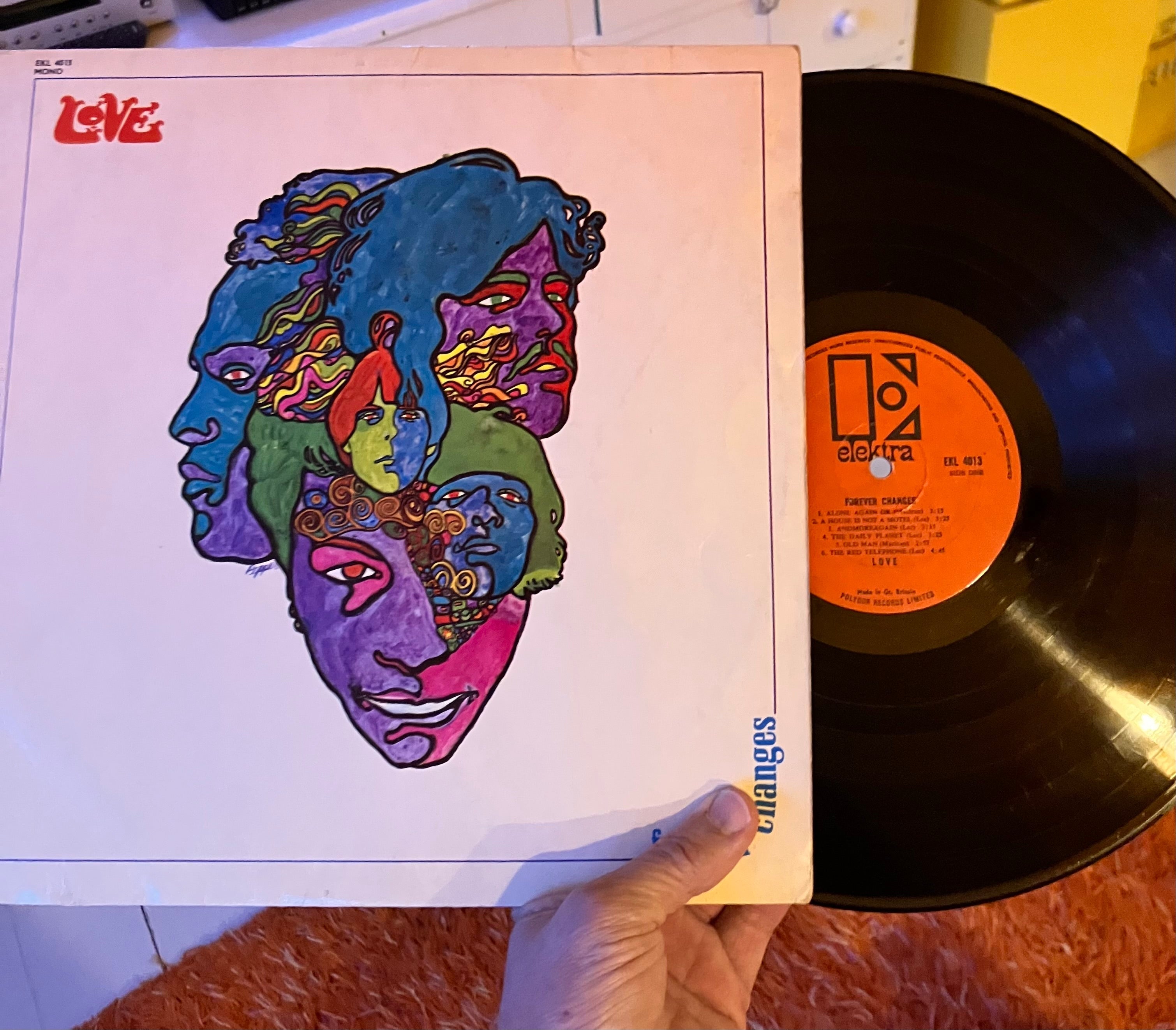
LOVE-Forever Changes
Related Posts

Fields-Fields
Some of you have asked me for personal experience related to records. Yes, I agree; giving you stories you can find on the web is just a bit boring. Today I will give you a treasure and neglected masterpiece: Fields – Fields Fields was a British trio formed by musicians with strong connections to Rare Bird, one of my favorites, and King Crimson. Keyboard player Graham Field came from Rare Bird, while drummer Andy McCulloch had played on King Crimson’s Lizard. Alan Barry completed the trio on vocals, bass, guitar and mellotron. Sadly, Fields never received the attention they deserved and the band was short-lived. But this is exactly the kind of record that makes digging through vinyl so rewarding. I absolutely love this album, especially this first UK pressing. Fantastic early-70s British progressive rock, full of Hammond, mellotron and atmosphere. A true neglected masterpiece, still very affordable. I can honestly tell you that I picked this one just for the cover, then realised the connection to Rare Bird.
Read More
Kaleidoscope – Tangerine Dream
Kaleidoscope and Tangerine Dream is a record that has been in the back of my mind since my very first tentative attempts at buying 60s LPs with psychedelic influences. It has not been uncommon for it to be labelled “the best psychedelic LP in the world”, which of course is not a reasonable claim. Music is probably the most subjective thing you can express a binary opinion about, which doesn’t exactly make you very credible. But having said that, Tangerine Dream is a gem in the context. A really good record. As with everything else, there has to be a beginning. Psychedelic records were relatively easy to come across during the first half of the 90s, when CDs meant that people were, quite literally, throwing their LPs out as landfill. Some records were perhaps kept closer to the chest, partly because of their emotional value, but also because of their reputation. Tangerine Dream was surely one of those records. Were there expensive second-hand records in 1990? Well, yes and no. If you paid 200 kronor, you could pretty much get whatever you wanted. More often than not, good second-hand LPs were available for less than fifty kronor. My personal ceiling was 200 kronor, at that price, it had to be something really special. “Why are you bothering with all that stuff? There won’t be any record players left soon.” I heard that quite often. So when I spotted a Fontana STL 5448, UK 1967, displayed on the wall at Sadisfaction in Haga, I thought: this one is coming home with me. The LP was high up, on the top row, right next to the counter on the right-hand side, looking into the shop. Martin was standing behind the counter with Tore, both busy dealing with customers, and the shop was packed that Saturday. The price was 500 kronor. 500 kronor. That was a lot of money back then. But it was also something I had been looking for, and I thought: fuck it, this one isn’t going to come around again. Since I didn’t want to interrupt Martin or Tore, and because 500 kronor was a considerable amount of money at the time, not something you paid for an LP every day – I took a slimm risk that someone else might grab it. So I crossed the road to withdraw one sixth of my monthly student loan from the cash machine. Five minutes later, at most, I was back in the shop with the cash. Cards were hardly ever used back then, and certainly not in a second-hand record shop. The space on the wall where the record had been was conspicuously empty. I scanned the shop and, to my horror, saw a man perhaps 35 years older than me, at least in my eyes, handing Martin a five-hundred-kronor note, with the LP tucked under his arm. You get the picture. A purchase I never made, and one I can’t really regret. But I do regret not interrupting Martin and asking him to put the LP aside for me. Tangerine Dream UK 1967 remained a dream.
Read More
Arthur Lee - Vindicator
I’ve talked about Arthur Lee before. He is probably one of the artists I’ve listened to most, perhaps with the exception of David Bowie – who knows. Most of Arthur Lee’s LPs have come to me in a steady stream, without too much effort. I started collecting these LOVE LPs more than 30 years ago. Some, such as Forever Changes, I have in several different editions – US, UK mono and stereo, etc. One album I did have to actively search for, though, was Arthur Lee’s Vindicator from 1972. Since finally finding a good copy, I’ve actually come across it more and more often. A rainy and granite-grey day in November 2007 in Oxford. Avid Records on Gloucester Street, just a few minutes’ walk from the bus station, was a real institution. Three floors packed with more records than could reasonably have fitted inside. Of course, I had rummaged around there before and asked the same question: “Any chance you’ve got a decent copy of Vindicator? This time the place looked even shabbier than I remembered. Garry, with a cup of tea in his hand, said, “I’ll have a look,” and headed upstairs. And then he came back with it. Mint condition. £25. Far too much at the time. But I paid. Vindicator presents Arthur Lee in a considerably more rock-oriented and heavier form. The production is far from polished. Quite the opposite – there is something dirty, almost garage-likeabout it. The guitars have real presence, and at times it feels as though the band is playing right on the edge of losing control.“Sad Song” opens the album in a stark and melancholic way, while “Everybody’s Gotta Live” is the record’s great gem. There are still clear psychedelic elements from the LOVE era, but here they meet a rawer, harder and more blues-rock-oriented Arthur Lee. And then, of course, there is that photograph on the back cover featuring Jimi Hendrix. Lee and Hendrix knew each other and had plans for a joint musical project that never came to fruition. Vindicator is an album from the crossroads between the psychedelic era of the 1960s and the heavier rock that would define the 1970s.
Read More
1 comment
as go