

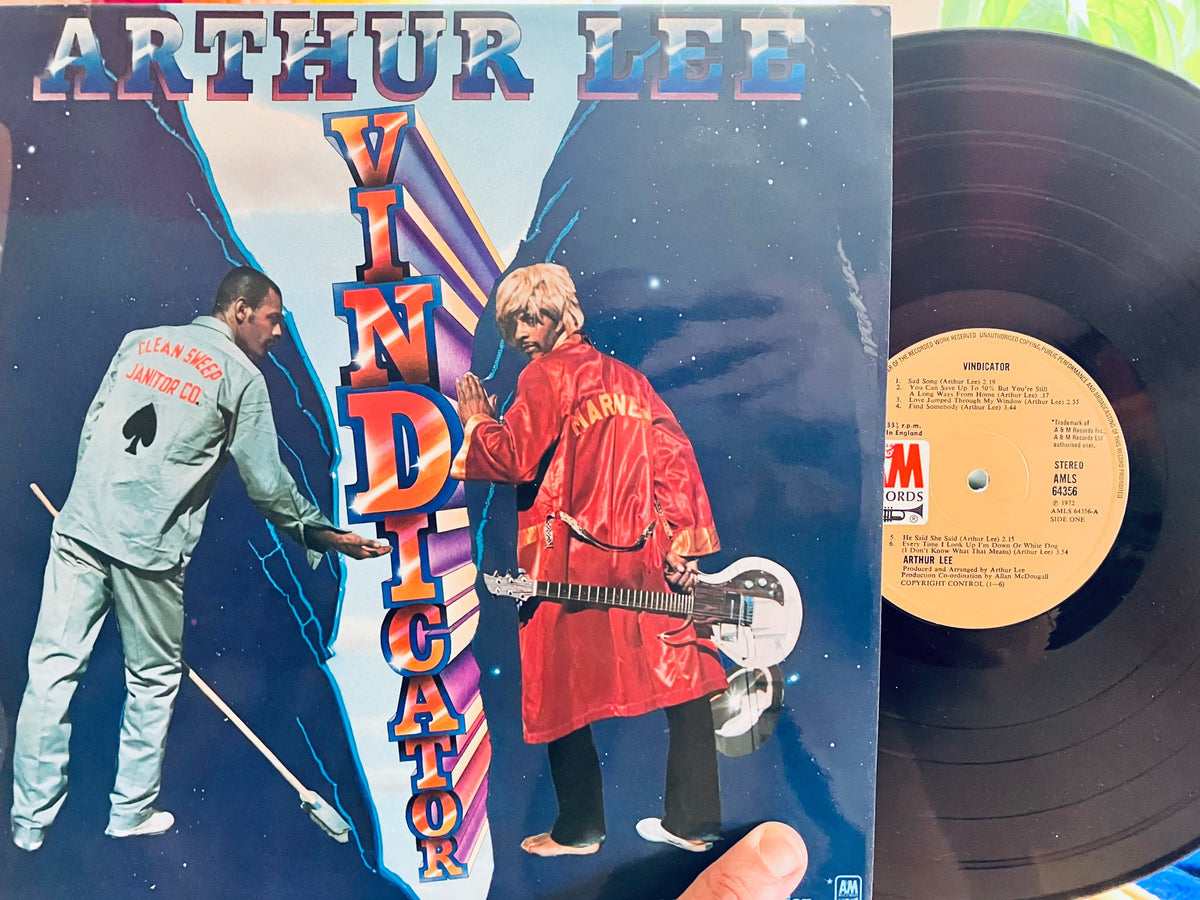
I’ve talked about Arthur Lee before. He is probably one of the artists I’ve listened to most, perhaps with the exception of David Bowie – who knows. Most of Arthur Lee’s LPs have come to me in a steady stream, without too much effort. I started collecting these LOVE LPs more than 30 years ago. Some, such as Forever Changes, I have in several different editions – US, UK mono and stereo, etc. One album I did have to actively search for, though, was Arthur Lee’s Vindicator from 1972. Since finally finding a good copy, I’ve actually come across it more and more often.
A rainy and granite-grey day in November 2007 in Oxford. Avid Records on Gloucester Street, just a few minutes’ walk from the bus station, was a real institution. Three floors packed with more records than could reasonably have fitted inside. Of course, I had rummaged around there before and asked the same question: “Any chance you’ve got a decent copy of Vindicator? This time the place looked even shabbier than I remembered. Garry, with a cup of tea in his hand, said, “I’ll have a look,” and headed upstairs. And then he came back with it. Mint condition. £25. Far too much at the time. But I paid.
Vindicator presents Arthur Lee in a considerably more rock-oriented and heavier form. The production is far from polished. Quite the opposite – there is something dirty, almost garage-likeabout it. The guitars have real presence, and at times it feels as though the band is playing right on the edge of losing control.“Sad Song” opens the album in a stark and melancholic way, while “Everybody’s Gotta Live” is the record’s great gem. There are still clear psychedelic elements from the LOVE era, but here they meet a rawer, harder and more blues-rock-oriented Arthur Lee. And then, of course, there is that photograph on the back cover featuring Jimi Hendrix. Lee and Hendrix knew each other and had plans for a joint musical project that never came to fruition. Vindicator is an album from the crossroads between the psychedelic era of the 1960s and the heavier rock that would define the 1970s.


