

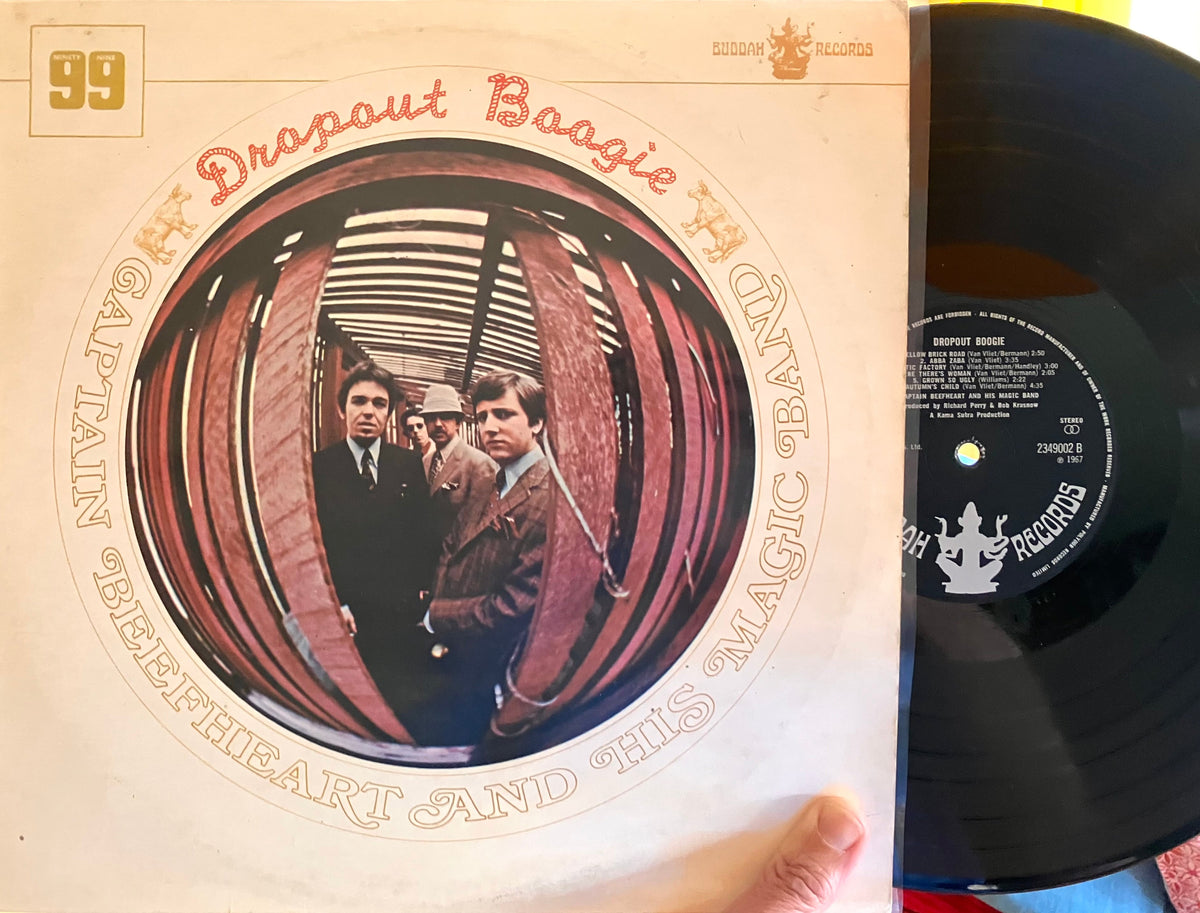
My mate Simon Nilsbet introduced me to Captain Beefheart: Yellow Brick Road and Autumn’s Child. I was utterly flabbergasted. Zig Zag Wanderer came pouring out of the loudspeakers. Simon had a hifi system of some distinction: Quad ESL-63 electrostatics, the big ones, complete with Quad bass units. The protective grilles had, naturally, been removed. One simply did these things. Art demanded sacrifice, after all. They stood free in the room like a pair of enormous flytraps, only considerably less forgiving. Quad expressly warns against the extremely high voltages present inside these speakers and forbids users from removing the protective grilles or base panels. I seem to recall that the system had a dedicated crossover, and that the bass units required a separate power amplifier. In other words, we had a pair of completely undressed high-voltage contraptions, capable, according to the Quad service manual, of voltage peaks of up to 5,300 volts, retaining a charge that could dissipate only slowly even after the power had been switched off. Quite the conversation piece, provided one survived long enough to discuss it.
Simon adored this artist. A voice that could growl, bark, crack and bellow. Blues phrases twisted and contorted until they almost lost their shape, becoming positively hysterical. Irregular rhythms, dissonance and the strangest instrumental interplay, all accompanied by a vocal style that could sound less like conventional singing than some sort of animalistic outburst. Amidst this tangle of Nottingham Analogue turntable, stacked Naim NAP 250 power amplifiers and cables strewn across the floor like so many tripwires, we smoked jazz tobacco and drank duty-free whisky. I can hear the question forming on your lips: Can this chap really be trusted to exercise sound judgement? Well, this was a long time ago, and my frontal lobes have matured somewhat since then. But, more importantly, I have spun this LP a hundred times or more, to such an extent that I am now on my third copy.


